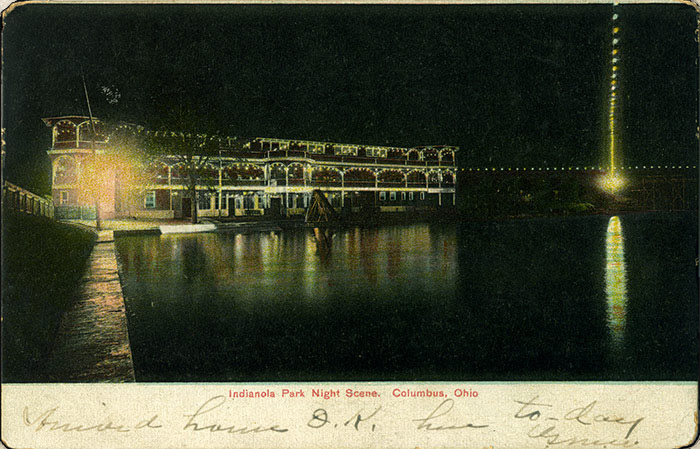
Indianola's pavilion at night, decked with electric lights, c. 1906. |
|
In the early years of the park, a house orchestra provided music for dancing in the pavilion. Parker's Orchestra was the house band. The waltz, the foxtrot, the tango, and the dances popularized by Vernon and Irene Castle were favorites of Indianola patrons of the 1900s and 1910s. |
|
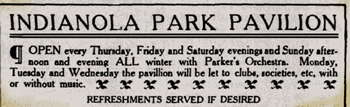
The park often held theme nights at the dancing pavilion. Theme nights were particularly popular in the 1920s. Typical themes included "University Night," "Carnival," "Old Time Favorites," and "Old vs. New." Dance contests with small prizes were also frequently offered. Unlike the rest of the park, the dance pavilion was open year round. It was host to Halloween, Christmas, and Valentine dances, proms, private parties, and probably even a wedding reception or two. In season, the dance pavilion was open nightly. October through May it was open Thursday-Sunday. |
Ad in the Ohio State University Lantern from November 1911, advertising the dance pavilion's winter hours and availability for group rental. |
In February 1918, the hardwood floor of the dance pavilion hosted something unusual: Ohio State University basketball. Normally, the Ohio State basketball team practiced and played in the Armory on campus. In 1918, forces were being mustered for World War I and soldiers were being quartered in the Armory. Coach Lynn St. John (namesake of St. John Arena) had to find someplace else for his team to play or cancel the rest of the season. Indianola Park came to the rescue. Ohio State had its daily practices (The coach had players jog up hill from High St. to the park) and played the final seven home games of its 1917-18 season on the dance floor at Indianola. Ohio State's first game at Indianola on February 9 was one to remember. Before an enthusiastic crowd of 800, the Buckeyes bested undefeated rival Indiana 32-28. The polished dance floor was something different for the ball players. "The slippery floor spoiled many a good shot and it was no unusual sight to see the referee and some of the players sprawling at the same time," read the sports page in The Ohio State Journal the next day. By the contest's end, all of the players on both teams and each of the referees had taken at least one good spill. After the game was over, the park brought out the orchestra and invited basketball fans to stay for a dance. |
|
Indianola favorites, Phil Baxter and The Texas Tommies, c. 1926 |
|
By the 1920s, tastes had changed. Dancers preferred jazz bands. The park hired bands to perform for stints of one to three weeks. Some of the more popular bands to visit the park were Phil Baxter's Texas Tommies (Hear some audio clips here), Tom Howard's Melody Lads, and The WKRC Radio Orchestra. The Charleston, Black Bottom, and the enduring foxtrot were the favorites of the flappers and their beaus who visited Indianola in the Twenties. In the 1920s and early 30s, the dance pavilion was well-known to Ohio State students. Every Friday night was University Night with special activities and promotions for area college students. Fraternities and sororities regularly held parties there. Indianola's dance floor hosted freshman and sophomore proms and informals and the big Varsity O dance. |
|
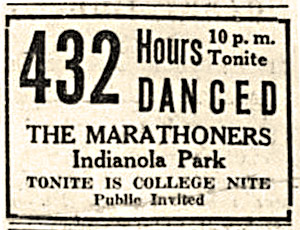
In 1929, the park hosted a dance marathon. On January 7, 1929, thirty couples began dancing. Participants danced all day and all night with 15 breaks every hour. Dancers even slept and took their meals dancing. $1000 was the prize for the last couple standing. The pavilion was open 24 hours a day and hundreds of spectators came and went at all hours to cheer on their favorites. Popular dance marathon master of ceremonies Pete Murphy was on hand to work up the crowds and put the hoofers through their paces. WCAH radio did live remotes from the hall. After two weeks, only seven couples remained. By the six-week mark, only two were still on the floor. The final two couples stuck it out until February 24--48 days and 11 hours (1,163 hours total) after it began--when the next-to-last couple could go on no more and was counted out. The 1929 marathon was such a success the park did it again in April 1930. |
Ad for the World's Championship Dance Marathon at Indianola Park. Read more about it here. |
In the 1930s, the dance pavilion was leased out to various groups and operated under a succession of names. First it was The Indianola Ballroom (1931-32), then The Claremont (1932), then Fo'Castle (1932-34), and finally Club Playmore (1935-37). It seems likely that dancers of that era performed the jitterbug, Lindy Hop, and other swing dances on Indianola's dance floor. Under new management, the dance pavilion began booking top local and regional hot jazz and early swing orchestras and occasionally latched onto a well-known national band. Isham Jones, Paul Tremaine, and Tal Henry all played Indianola Park in the early 1930s. |
|
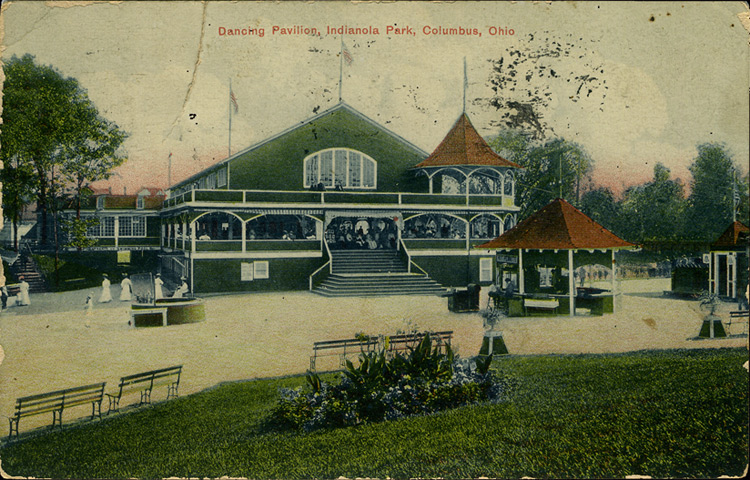
A rare view of the dance pavilion from the north and east. Note the Bell Telephone booth to the right, the peanut vendor's gazebo, and the tunnel leading to the changing areas and pool on the east side of the building. |
|